- People kept talking about Facebook. It was on the news. It was catching criminals. So I finally checked it out. It's easy to see how it can become addictive, especially when you can connect with friends you haven't seen in...four, five years or more. Of course there's always the awkward "I don't know if this person actually likes me" or the determination of what really constitutes a "friend." So far I've learned that one person likes me whom I didn't think did, and I've heard from one high school friend whom I'd had no idea what happened to. Several friends are engaged, and that's always unsettling to imagine. Very frequently there's the temptation to go back to the page and see how many "friends" I have now. Very, very frequently. But then there are all the friends not on Facebook, meaning your friend list is not at all an accurate representation of kindredness. More than those who have 100+ facebook friends, I envy my friends who are so busy and engrossed in living that they don't have time for e-mail or the Internet.
- My "research" for work revealed that the Bonsai Kitten was a farce.
- S.W. pointed out findmyspot.com, and I'm destined to live in New York Mills, MN -- and the only person I ever met from there ended up being a compulsive thief.
- On NPR they were talking about the average American.
- I've been filling out applications for freelance proofreading work, and putting off brainstorming for some freelance writing opportunities. To make a long story short, I know I need to be writing more -- or at least some. But what to write?
Monday, January 30, 2006
facebook, bonsai kitten, and other fads

Sunday, January 29, 2006
Thursday, January 26, 2006
drastic
So, I've been avoiding all of you. Don't feel bad -- I've been avoiding me, too.
There comes a point when you're so fed up and tired of being tired that you basically stop feeling. It makes the days pass easier, and, frankly, I'm actually happier. Or, I'm happier not thinking about the fact that I'm not happy. And what is "happy" and how do you make it and is it important? Let's not go there.
It's a time for spontaneous, unprovoked screaming. It's time for something drastic.
So I googled "drastic." I got a blog for some punk named Olly. This was atop the newest post:
 (Sigh.)
First thought: "This is where I want to die." But that was very morbid.
I'm sure it's in Yorkshire. And there's a lorry driving through the dales.
If I were a murderer, I would wear something drastically not-black. Maybe electric blue. I don't think white is the opposite of black. It might be electric blue. Or vivid tangerine. (Which are probably opposites of each other.)
Randomness of the day: A gentleman came into the office at 5 p.m. and nearly scared me to death. He was carrying a box. "These are from the Girl Scouts to thank you for all of your service to the community." The box said "Girl Scout Cookie Sampler" on the side. It was a medium sized box, probably breadbox-sized in the grand scheme of things. Maybe a bit smaller.
"Are you serious?" I said. He seemed puzzled. "Yes," he replied. And he walked out the door. And he wasn't lying. Inside were eight boxes of Girl Scout Cookies. (Which, coincidentally, are baked just up the road.)
There comes a point when you're so fed up and tired of being tired that you basically stop feeling. It makes the days pass easier, and, frankly, I'm actually happier. Or, I'm happier not thinking about the fact that I'm not happy. And what is "happy" and how do you make it and is it important? Let's not go there.
It's a time for spontaneous, unprovoked screaming. It's time for something drastic.
So I googled "drastic." I got a blog for some punk named Olly. This was atop the newest post:
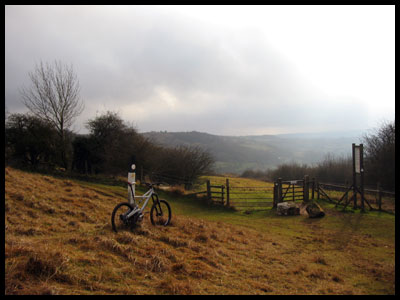 (Sigh.)
First thought: "This is where I want to die." But that was very morbid.
I'm sure it's in Yorkshire. And there's a lorry driving through the dales.
If I were a murderer, I would wear something drastically not-black. Maybe electric blue. I don't think white is the opposite of black. It might be electric blue. Or vivid tangerine. (Which are probably opposites of each other.)
Randomness of the day: A gentleman came into the office at 5 p.m. and nearly scared me to death. He was carrying a box. "These are from the Girl Scouts to thank you for all of your service to the community." The box said "Girl Scout Cookie Sampler" on the side. It was a medium sized box, probably breadbox-sized in the grand scheme of things. Maybe a bit smaller.
"Are you serious?" I said. He seemed puzzled. "Yes," he replied. And he walked out the door. And he wasn't lying. Inside were eight boxes of Girl Scout Cookies. (Which, coincidentally, are baked just up the road.)
Monday, January 16, 2006
the captivating romance
The book is not half over as I'd previously thought. My apologies. Of course you have the freedom to stop reading when you're bored.
"Romanced"
After conversations with Nick and reading Ryan's comment, I'll be honest that I had no expectation that I'd find anything I agreed with in here. On the other hand, I wanted to be slapped-in-the-face wrong.
This is how it began:
"A cool breeze whispered by, one of the first to speak of the winter to come. As I walked, I was dazzled by the splendor of it all, and I began to compliment God on the great job he had done. 'It's beautiful, Lord! The stars are amazing!'
I'm glad you like it, my Darling.
I stopped dead in my tracks. I blushed. Did the God of the universe just call me 'Darling?' Was that okay? I was warmed to the depths of my soul by the endearment, but I also wondered if I had made it up. And was it sacrilegious to believe God would use such a loving name?"
Of course he didn't call you "darling," dimwit.
(That was what I thought.)
And then I was slapped in the face -- by my own arrogance. As Nick said, many of the Eldredges' arguments are using pathos, and my "educated" (conceited) mind puts little value in anything but logos. That's not to say the Eldredges aren't educated people, but chances are that I'm not in their target market. You are probably not in their target market (since 80 percent of those reading this are male anyhow). Their intended audience is not looking for solid reasoning. They're looking for something that makes sense but echoes with their own troubles and desires.
"It's unwise to fall for the pathetic," we say. And yet they are writing to women about women -- women who are eaten up, tearing out their hair about their craving for the pathetic that they can't manage to suffocate or explain or rationalize or own up to or live with. We're here in the 21st century and now we're men, just like we wanted, in everything but physical traits and this this self-centered neediness that will not go away. What we want desperately is to want no thing, no one. Just like a god?
The Lord God said, "It is not good for the man to be alone. I will make a helper suitable for him." And then she helped him eat the apple.
As rational as we would like to be, Jesus is a perfect example of throwing logos out the window.
Why does the pathetic drive us insane?
(So this is off track. Better luck next chapter.)
"Romanced"
After conversations with Nick and reading Ryan's comment, I'll be honest that I had no expectation that I'd find anything I agreed with in here. On the other hand, I wanted to be slapped-in-the-face wrong.
This is how it began:
"A cool breeze whispered by, one of the first to speak of the winter to come. As I walked, I was dazzled by the splendor of it all, and I began to compliment God on the great job he had done. 'It's beautiful, Lord! The stars are amazing!'
I'm glad you like it, my Darling.
I stopped dead in my tracks. I blushed. Did the God of the universe just call me 'Darling?' Was that okay? I was warmed to the depths of my soul by the endearment, but I also wondered if I had made it up. And was it sacrilegious to believe God would use such a loving name?"
Of course he didn't call you "darling," dimwit.
(That was what I thought.)
And then I was slapped in the face -- by my own arrogance. As Nick said, many of the Eldredges' arguments are using pathos, and my "educated" (conceited) mind puts little value in anything but logos. That's not to say the Eldredges aren't educated people, but chances are that I'm not in their target market. You are probably not in their target market (since 80 percent of those reading this are male anyhow). Their intended audience is not looking for solid reasoning. They're looking for something that makes sense but echoes with their own troubles and desires.
"It's unwise to fall for the pathetic," we say. And yet they are writing to women about women -- women who are eaten up, tearing out their hair about their craving for the pathetic that they can't manage to suffocate or explain or rationalize or own up to or live with. We're here in the 21st century and now we're men, just like we wanted, in everything but physical traits and this this self-centered neediness that will not go away. What we want desperately is to want no thing, no one. Just like a god?
The Lord God said, "It is not good for the man to be alone. I will make a helper suitable for him." And then she helped him eat the apple.
As rational as we would like to be, Jesus is a perfect example of throwing logos out the window.
Why does the pathetic drive us insane?
(So this is off track. Better luck next chapter.)
on the days it's hard not to scream
I am the only one to blame for this
Somehow it all ends up the same
Soaring on the wings of selfish pride I flew too high
and like Icarus I collide with a world I try so hard to leave behind
To rid myself of all but love, to give and die
To turn away and not become another nail to pierce the skin of one who loved
More deeply than the oceans,
More abundant than the tears of a world embracing every heartache
Can I be the one to sacrifice
Or grip the spear and watch the blood and the water flow
I am the only one to blame for this
Somehow it all ends up the same
Soaring on the wings of selfish pride I flew too high
and like Icarus I collide with a world I try so hard to leave behind
To rid myself of all but love, to give and die
To turn away and not become another nail to pierce the skin of one who loved
More deeply than the oceans,
More abundant than the tears of a world embracing every heartache
Can I be the one to sacrifice
Or grip the spear and watch the blood and the water flow
Saturday, January 14, 2006
even more captivating
(Right up front I'll apologize -- this is going to be long, because it covers two chapters and I'm writing it.)
"A Special Hatred"
The main point being argued here is that women particularly suffer because the Serpent (Lucifer, Satan, etc.) envied Eve more -- and therefore targeted her first -- because she was the incarnation of God's beauty and glory.
This all hinges on Satan wanting beauty above all things. John and Stasi use a passage from Ezekiel 28 to support this. Unfortunately, the passage is what the prophet is supposed to say to the king of Tyre. Yes, you could use it as a parallel, but it seems unwise to me to make this criticial-to-the-rest-of-the-book claim and not provide any more evidence. Perhaps Satan did target Even instead of Adam for that reason, but I was always taught (for better or worse) that Satan got demoted for wanting to be God (just like Adam and Eve). And Satan did go to Eve first, but hey -- there was a fifty-fifty shot of being targeted to start with when there are only two humans to choose from. Do you think there is a reason he picked her?
An exerpt:
Most of you are living with the guilt that somehow it's your fault you aren't more deeply pursued now. That you do not have an essential role in a great adventure. That you have no beauty to unveil. The message of our wounds nearly always is, "This is because of you. This is what you deserve." It changes things to realize that, no, it is because you are glorious that these things happened. It is because you are a major threat to the kingdom of darkness. Because you uniquely carry the glory of God to the world.
The Satan-beauty-envy thing still isn't working for me. The idea of Satan envying us for any reason doesn't seem right. Others?
Skipping to another exeprt:
Part of a man's fundamental reluctance to truly dive into the world of a woman comes from a man's deepest fear, failure. ... The effect is that most women feel alone. Some of this is simply selfishness on the part of men. Lord knows men are selfish and self-centered. When Eve was first assaulted, Adam didn't do jack squat. Men sin through violence and through passivity.
Immediate reaction: maybe. Women are clearly self-centered, too. As a not-male, I can't verify that failure is a man's deepest fear. Token males, what do you think about this passage?
"Healing the Wound"
Turning to this page, I thought, "Okay, this is it," as in this chapter will be a tipping point for me in assessment of the book. Will it take a new approach to healing, or have we built up to a healing message we've heard before?
Exactly what I did not want to read was "Turn to God, God thinks you're beautiful, that there's no one else like you, and he would have died if you were the only person on earth." These things are true, but -- maybe I'm off here, reactions? -- hearing that God thinks I'm beautiful is like your mom telling you that you did a great job at that last concert or play or what have you. How God feels about my appearance and general attractiveness is not one of my big concerns -- there's no need to attract God. Maybe that sounds bad or shallow. But it's like someone telling you God loves you when you're crying and all you really want is a physical hug. Your mom loves you completely apart from your own merit, but simply because you are hers. And that is a good thing, but there are other times when you want to be loved for more than that. Does that make sense?
(Before we came down to it, readers were addressed as "dear heart" a few times and it was hard to keep a straight face.)
This is the last paragraph of the chapter:
Take your Question (usually "Am I lovely?) to Jesus. Ask him to show you your beauty. And then? Let him Romance you.
(Sigh.)
Don't get me wrong -- I'm not denying that Jesus can heal us. But he does it on his own time, and I am not renowned for patience. Again, I don't want to be romanced by God. Then, to be my own devil's advocate: Isn't He supposed to be sufficient?
I leave you with what seems to me a theological inconsistency. In this chapter we read:
Why did God curse Eve with loneliness and heartache, an emptiness that nothing would be able to fill? ... He did it to save her. For as we all know personally, something in Eve's heart shifted at the Fall. Something sent its roots down deep into her soul -- and ours -- that mistrust of God's heart, that resolution to find life on our own terms. So God has to thwart her. In love, he has to block her attempts until, wounded and aching, she turns to him and him alone for her rescue.
But back in the last chapter:
The Evil One had a hand in all that has happened to you. If he didn't arrange for the assault directly -- and certainly human sin has a large enough role to play -- then he made sure he drove the message of the wounds home into your heart. He is the one who has dogged your heels with shame and self-doubt and accusation. He is the one who has done these things in order to prevent your restoration.
Which is right, or are both or neither?
(To their credit, their premises of "what women want" seem accurate. Thought I'd better end on a positive note.)
"A Special Hatred"
The main point being argued here is that women particularly suffer because the Serpent (Lucifer, Satan, etc.) envied Eve more -- and therefore targeted her first -- because she was the incarnation of God's beauty and glory.
This all hinges on Satan wanting beauty above all things. John and Stasi use a passage from Ezekiel 28 to support this. Unfortunately, the passage is what the prophet is supposed to say to the king of Tyre. Yes, you could use it as a parallel, but it seems unwise to me to make this criticial-to-the-rest-of-the-book claim and not provide any more evidence. Perhaps Satan did target Even instead of Adam for that reason, but I was always taught (for better or worse) that Satan got demoted for wanting to be God (just like Adam and Eve). And Satan did go to Eve first, but hey -- there was a fifty-fifty shot of being targeted to start with when there are only two humans to choose from. Do you think there is a reason he picked her?
An exerpt:
Most of you are living with the guilt that somehow it's your fault you aren't more deeply pursued now. That you do not have an essential role in a great adventure. That you have no beauty to unveil. The message of our wounds nearly always is, "This is because of you. This is what you deserve." It changes things to realize that, no, it is because you are glorious that these things happened. It is because you are a major threat to the kingdom of darkness. Because you uniquely carry the glory of God to the world.
The Satan-beauty-envy thing still isn't working for me. The idea of Satan envying us for any reason doesn't seem right. Others?
Skipping to another exeprt:
Part of a man's fundamental reluctance to truly dive into the world of a woman comes from a man's deepest fear, failure. ... The effect is that most women feel alone. Some of this is simply selfishness on the part of men. Lord knows men are selfish and self-centered. When Eve was first assaulted, Adam didn't do jack squat. Men sin through violence and through passivity.
Immediate reaction: maybe. Women are clearly self-centered, too. As a not-male, I can't verify that failure is a man's deepest fear. Token males, what do you think about this passage?
"Healing the Wound"
Turning to this page, I thought, "Okay, this is it," as in this chapter will be a tipping point for me in assessment of the book. Will it take a new approach to healing, or have we built up to a healing message we've heard before?
Exactly what I did not want to read was "Turn to God, God thinks you're beautiful, that there's no one else like you, and he would have died if you were the only person on earth." These things are true, but -- maybe I'm off here, reactions? -- hearing that God thinks I'm beautiful is like your mom telling you that you did a great job at that last concert or play or what have you. How God feels about my appearance and general attractiveness is not one of my big concerns -- there's no need to attract God. Maybe that sounds bad or shallow. But it's like someone telling you God loves you when you're crying and all you really want is a physical hug. Your mom loves you completely apart from your own merit, but simply because you are hers. And that is a good thing, but there are other times when you want to be loved for more than that. Does that make sense?
(Before we came down to it, readers were addressed as "dear heart" a few times and it was hard to keep a straight face.)
This is the last paragraph of the chapter:
Take your Question (usually "Am I lovely?) to Jesus. Ask him to show you your beauty. And then? Let him Romance you.
(Sigh.)
Don't get me wrong -- I'm not denying that Jesus can heal us. But he does it on his own time, and I am not renowned for patience. Again, I don't want to be romanced by God. Then, to be my own devil's advocate: Isn't He supposed to be sufficient?
I leave you with what seems to me a theological inconsistency. In this chapter we read:
Why did God curse Eve with loneliness and heartache, an emptiness that nothing would be able to fill? ... He did it to save her. For as we all know personally, something in Eve's heart shifted at the Fall. Something sent its roots down deep into her soul -- and ours -- that mistrust of God's heart, that resolution to find life on our own terms. So God has to thwart her. In love, he has to block her attempts until, wounded and aching, she turns to him and him alone for her rescue.
But back in the last chapter:
The Evil One had a hand in all that has happened to you. If he didn't arrange for the assault directly -- and certainly human sin has a large enough role to play -- then he made sure he drove the message of the wounds home into your heart. He is the one who has dogged your heels with shame and self-doubt and accusation. He is the one who has done these things in order to prevent your restoration.
Which is right, or are both or neither?
(To their credit, their premises of "what women want" seem accurate. Thought I'd better end on a positive note.)
Friday, January 13, 2006
- Squirrels were flirting this afternoon in front of the beautiful -- but condemned -- brick house down the street, which is now for sale.
- What does squirrel poop look like?
- Another disheartening sign that The Day is approaching: Conversation hearts are five for a dollar. Fax me, baby.
- Somewhat related, an update on Ariel's wacky ancestors: 1) Several newly-discovered grandfathers are named Valentine Day (seriously); 2) Ariel's grandfathers are getting divorces long before it's in vogue; 3) One of Ariel's great-great-grandfathers grew up in a boarding house run by the relatives of his future wife (and later ex-wife).
- I spent the afternoon browsing through all the editions of my paper since I've been there; 2005 is over, so it's time to prepare entries for the state newspaper association contest. I'm not too worked up about it because our paper won for general excellence last year, and it's not generally excellent. Still, even deciding what to enter is a chore because there are all those weeks to work through and so many categories: general excellence, typography and design, best news story, best news series, best feature story, best feature series, best headline writing, best column, best humor column, best spot news photo, best feature photo, best sports photo, best photo series, and outstanding young journalist. And I'm lucky -- I only have to peruse seven months of papers. Everyone else has 12 months to deal with. (I guess you could look at it the other way -- I only have seven months of work to choose from.)
- On the way home from the flirting-squirrel walk -- during which I coveted many adequate to superior hanging porch swings -- I was approached by not one but two sets of Jehovah's witnesses. I'm not sure how to react to them. I forget their theology; I just remember it's "bad."
- And the latest sin -- I was once again tempted to abduct the neighbors' puppy before I walked in the door.
Thursday, January 12, 2006
Jacob have I misunderstood
In Sunday School, the flannelgraph presentations explain how Jacob put on an animal fur and his mom made soup and then his dad gave him the blessing his brother was supposed to get. And then Jacob's brother got mad and he had to run away and when he ran away he got two wives for it.
But they don't stop to explain -- or maybe it's that I don't stop to think -- that what Jacob and his mom did was wrong. And not only does Laban trick his son-in-law, but Jacob deceives him back. And after Jacob tells God he will do as He says and go to Esau, he only does it partway, and all the time Jacob is trying to cover his own back at the expense of others (i.e. sending his least liked concubines, wives, and children ahead of him to Esau).
And let's stop and talk about those kids. Yes, Jacob gets a lot of them (which happens when you have two wives and two concubines), but he plays favorites and his wives aren't of the best stature, either. What I didn't really think about before is that God chooses to descend the Messiah not out of Rachel (the lot that Jacob picked for himself), but from Leah, what was given him. And the son from Leah (Judah) is the fourth, the one she finally praised God with.
What I still don't get: Why did God wrestle Jacob? What is the theological significance of Jacob stealing the birthright, or really the entire Jacob story?
But they don't stop to explain -- or maybe it's that I don't stop to think -- that what Jacob and his mom did was wrong. And not only does Laban trick his son-in-law, but Jacob deceives him back. And after Jacob tells God he will do as He says and go to Esau, he only does it partway, and all the time Jacob is trying to cover his own back at the expense of others (i.e. sending his least liked concubines, wives, and children ahead of him to Esau).
And let's stop and talk about those kids. Yes, Jacob gets a lot of them (which happens when you have two wives and two concubines), but he plays favorites and his wives aren't of the best stature, either. What I didn't really think about before is that God chooses to descend the Messiah not out of Rachel (the lot that Jacob picked for himself), but from Leah, what was given him. And the son from Leah (Judah) is the fourth, the one she finally praised God with.
What I still don't get: Why did God wrestle Jacob? What is the theological significance of Jacob stealing the birthright, or really the entire Jacob story?
Tuesday, January 10, 2006
ignite your faith
Campus Life magazine recently became "Ignite Your Faith" magazine. Personally, I am not in favor of the switch. Doesn't sound too hip to me.
(But kudos to Campus Life for existing -- it's how I found NW! -- or rather how I found Dordt and hated it and subsequently found NW. And, it made me a real-live Lexis-Nexis-ed author! Not authoress -- I'm listed as male.)
(But kudos to Campus Life for existing -- it's how I found NW! -- or rather how I found Dordt and hated it and subsequently found NW. And, it made me a real-live Lexis-Nexis-ed author! Not authoress -- I'm listed as male.)
Monday, January 09, 2006
i speak clarinet (and other tidbits)
I.Sing it to me, Benny...
While it has been eight months since I've even opened the case, I still speak clarinet. Last week I was listening to "Swing Time," a public radio program in the early evenings where old-timers dedicate songs to each other. A Benny Goodman song came on, and, though I'd never heard it and certainly would not have been able to play it anywhere near that caliber, I felt like he was speaking for me and we were on the same wavelength. Seriously, it is like hearing your own voice when you hear your instrument playing. Made me want to go home and dig Mr. Buffet out. Brought back memories of attempted reed-burnings and thoughts-of-the-day and catharsis groups (ah, the Willems) and being petrified of a certain senior. And acclimating freshmeat. And then there's Lora Goll. (Where is Lora Goll? Anyone know? I suddenly miss Lora Goll tremendously.)
II. Another book on my to-write list: "The BS after the BA: An idiot's guide to life after college." Seriously. (Seriously.) I need that book to exist to read it for myself. But the next best thing is writing it to help another. It would be largely based on interviews with college staff and grads and ...well, everyone.
III. Related question for all those old wise souls out there: Did (do) you ever get discouraged by (again, not trying to sound dramatic) not having much to look forward to? For example, when you're in high school you know college is next. Freshman year, you've got sophomore year on your calendar for the next year. Then you've got junior year, then senior... and suddenly there is nothing on your calendar at all for any time in the future. Life is so open that it's not only exciting but frightening. I'm not exactly sure what I'm trying to ask...do you ever get discouraged by having this blank slate in front of you, or have you found tips to combat it? Sure, there are the Sunday School responses that our futures are in God's hands and he has a purpose for us, and they're true and all, but...I'm hoping for something more tangible.
IV. Tonight I covered a school board meeting. I never get bored at them, and I'm always a little sad to see them end. They make me miss school even more. (Noticing a theme? I'm kind of feeling like I did in August when it seemed wrong to not be going back to school -- Christmas is over so isn't it time to buy books? No, go pay your water bill.) The details of curriculum and policies and...the details fascinate me. (A bizarre fascination with systems runs in my family.) School has been life for...17 years, so to suddenly just trash it is naturally awkward.
V. Now, for something not school-related. My grandfather's grandfather was in the calvary during the Civil War. I'd never really had much interest in the Civil War, with the exception of the wonderful novel "Cold Mountain" (I was one of the few who actually liked the film, also). I read it...in school.
Oh well. There's always next time!
While it has been eight months since I've even opened the case, I still speak clarinet. Last week I was listening to "Swing Time," a public radio program in the early evenings where old-timers dedicate songs to each other. A Benny Goodman song came on, and, though I'd never heard it and certainly would not have been able to play it anywhere near that caliber, I felt like he was speaking for me and we were on the same wavelength. Seriously, it is like hearing your own voice when you hear your instrument playing. Made me want to go home and dig Mr. Buffet out. Brought back memories of attempted reed-burnings and thoughts-of-the-day and catharsis groups (ah, the Willems) and being petrified of a certain senior. And acclimating freshmeat. And then there's Lora Goll. (Where is Lora Goll? Anyone know? I suddenly miss Lora Goll tremendously.)
II. Another book on my to-write list: "The BS after the BA: An idiot's guide to life after college." Seriously. (Seriously.) I need that book to exist to read it for myself. But the next best thing is writing it to help another. It would be largely based on interviews with college staff and grads and ...well, everyone.
III. Related question for all those old wise souls out there: Did (do) you ever get discouraged by (again, not trying to sound dramatic) not having much to look forward to? For example, when you're in high school you know college is next. Freshman year, you've got sophomore year on your calendar for the next year. Then you've got junior year, then senior... and suddenly there is nothing on your calendar at all for any time in the future. Life is so open that it's not only exciting but frightening. I'm not exactly sure what I'm trying to ask...do you ever get discouraged by having this blank slate in front of you, or have you found tips to combat it? Sure, there are the Sunday School responses that our futures are in God's hands and he has a purpose for us, and they're true and all, but...I'm hoping for something more tangible.
IV. Tonight I covered a school board meeting. I never get bored at them, and I'm always a little sad to see them end. They make me miss school even more. (Noticing a theme? I'm kind of feeling like I did in August when it seemed wrong to not be going back to school -- Christmas is over so isn't it time to buy books? No, go pay your water bill.) The details of curriculum and policies and...the details fascinate me. (A bizarre fascination with systems runs in my family.) School has been life for...17 years, so to suddenly just trash it is naturally awkward.
V. Now, for something not school-related. My grandfather's grandfather was in the calvary during the Civil War. I'd never really had much interest in the Civil War, with the exception of the wonderful novel "Cold Mountain" (I was one of the few who actually liked the film, also). I read it...in school.
Oh well. There's always next time!
Sunday, January 08, 2006
captivating, chapter 4
All 15 pages can be boiled down to this paragraph:
We can't put words to it, but deep down we fear there is something terribly wrong with us. If we were the princess, the prince would have come. If we were the daughter of a king, he would have fought for us. We can't help but believe that if we were different, if we were better, then we would have been loved as we so longed to be. It must be us.
In short, we are a product of our parents' attitudes toward gender roles and gender values.
Immediate reaction: Gag me with a stick. It's so dramatic. It's so...girly.
Maybe that reaction is evidence, the authors would say, of my upbringing. I must have been raised to believe that women should not be alluring or needy but...almost asexual. Not tomboys but simply not-male human beings. Low-maintenance, unemotional, self-reliant non-males.
And perhaps they would have a point. The chapter is full of stories about little girls in pink tutus who were either ignored or severely abused by their alcoholic fathers and embittered mothers. I kept thinking, "That little girl needs to stop looking for approval and go build a sandcastle in the backyard and leave the adults alone." (Except of course for the abuse, which was deplorable.)
Is femininity a blessing or a bother? When I think of femininity, I envision swooning and neediness for attention and admiration. Almost everything about it is abhorrent to me (though we'll not go into whether I display these traits myself). I nearly identified with Stasi's ("dramatic") tendency to hide away and be more comfortable when she's not available to be a source of problems.
I'm becoming more convinced that independence is not a such an incredible virtue after all (as I retreat further into hermit-hood), and that vulnerability -- despite the overwhelming odds of being hurt -- may be crucial.
We can't put words to it, but deep down we fear there is something terribly wrong with us. If we were the princess, the prince would have come. If we were the daughter of a king, he would have fought for us. We can't help but believe that if we were different, if we were better, then we would have been loved as we so longed to be. It must be us.
In short, we are a product of our parents' attitudes toward gender roles and gender values.
Immediate reaction: Gag me with a stick. It's so dramatic. It's so...girly.
Maybe that reaction is evidence, the authors would say, of my upbringing. I must have been raised to believe that women should not be alluring or needy but...almost asexual. Not tomboys but simply not-male human beings. Low-maintenance, unemotional, self-reliant non-males.
And perhaps they would have a point. The chapter is full of stories about little girls in pink tutus who were either ignored or severely abused by their alcoholic fathers and embittered mothers. I kept thinking, "That little girl needs to stop looking for approval and go build a sandcastle in the backyard and leave the adults alone." (Except of course for the abuse, which was deplorable.)
Is femininity a blessing or a bother? When I think of femininity, I envision swooning and neediness for attention and admiration. Almost everything about it is abhorrent to me (though we'll not go into whether I display these traits myself). I nearly identified with Stasi's ("dramatic") tendency to hide away and be more comfortable when she's not available to be a source of problems.
I'm becoming more convinced that independence is not a such an incredible virtue after all (as I retreat further into hermit-hood), and that vulnerability -- despite the overwhelming odds of being hurt -- may be crucial.
Saturday, January 07, 2006
cuisine du jour
When I'm upset about A, B, and C, my appetite is significantly affected. You probably know the feeling -- only a few select foods on the face of the planet are worth the trouble of swallowing.
Today, for example. I was definitely hungry -- I had oyster crackers for lunch. But for dinner, just three things seemed worth bothering about: 1)Ghirardelli Double Chocolate Brownies, which I duly went to the store and purchased; 2)cold manicotti from "Treats," a deli in downtown Northfield that went out of business seven years ago; and 3) cashew chicken from the Szechuan Inn.
Clearly, there was going to be a problem. Two HyVees and two Chinese restaurants later, I come home with a microwave pizza. Who in their right mind buys a microwave pizza, let alone eats it?
This brought me to thinking: Choosing a Chinese restaurant is a tricky business. I don't know about you, but most of them give me the impression that they are run by the mob and are in violation of many health codes. Sometimes that's not a problem. But I did not want salmonella to become problem D.
And granted, I am no authority on Chinese food. Relatively speaking, I'm a Chinese food virgin. I've tried about two dishes at one restaurant. But...has anyone ever been to a LeeAnn Chin's? How is it?
Today, for example. I was definitely hungry -- I had oyster crackers for lunch. But for dinner, just three things seemed worth bothering about: 1)Ghirardelli Double Chocolate Brownies, which I duly went to the store and purchased; 2)cold manicotti from "Treats," a deli in downtown Northfield that went out of business seven years ago; and 3) cashew chicken from the Szechuan Inn.
Clearly, there was going to be a problem. Two HyVees and two Chinese restaurants later, I come home with a microwave pizza. Who in their right mind buys a microwave pizza, let alone eats it?
This brought me to thinking: Choosing a Chinese restaurant is a tricky business. I don't know about you, but most of them give me the impression that they are run by the mob and are in violation of many health codes. Sometimes that's not a problem. But I did not want salmonella to become problem D.
And granted, I am no authority on Chinese food. Relatively speaking, I'm a Chinese food virgin. I've tried about two dishes at one restaurant. But...has anyone ever been to a LeeAnn Chin's? How is it?
Tuesday, January 03, 2006
diary-ette of a church hopper
Today I was talking to my adviser -- well, make that reading an e-mail from my former adviser, boss and professor. I'd told him about church hopping trouble, and here's what he replied:
"Finding a church is always tricky, not the least because it takes such a long time what with only one day a week to really check something out. Hang in there."
Brilliant. I've got 52 days a year to make a choice I wish to affect 365. I guess that's why he's an adviser.
P.S. He signed the e-mail with his first name. That's crazy. I could never call him "Jeff." Sure, there's Carl and Joonna and Martin and sometimes Kim, but "Jeff" would be as strange as calling my dad "Steve." It's like anyone of any age who is not Sharon addressing the DMG as "Tim." (I can still remember asking Carl how to address Martin, in a why-are-you-leaving-us-with-this-stranger kind of voice.)
P.P.S. Shout out to UForeigner. I hear you. Just another reminder -- it's so strange to have to get an e-mail update on life from someone I saw every day for four years. I knew every time his kids were sick, for goodness' sake, and what their symptoms were.
P.P.P.S. Interblog plug: xanga.com/arielise for an update on my royal lineage and a solace for girls with blue eyes.
"Finding a church is always tricky, not the least because it takes such a long time what with only one day a week to really check something out. Hang in there."
Brilliant. I've got 52 days a year to make a choice I wish to affect 365. I guess that's why he's an adviser.
P.S. He signed the e-mail with his first name. That's crazy. I could never call him "Jeff." Sure, there's Carl and Joonna and Martin and sometimes Kim, but "Jeff" would be as strange as calling my dad "Steve." It's like anyone of any age who is not Sharon addressing the DMG as "Tim." (I can still remember asking Carl how to address Martin, in a why-are-you-leaving-us-with-this-stranger kind of voice.)
P.P.S. Shout out to UForeigner. I hear you. Just another reminder -- it's so strange to have to get an e-mail update on life from someone I saw every day for four years. I knew every time his kids were sick, for goodness' sake, and what their symptoms were.
P.P.P.S. Interblog plug: xanga.com/arielise for an update on my royal lineage and a solace for girls with blue eyes.
Sunday, January 01, 2006
captivating, part 3
In the news business, they call it the nut graf. Other academics refer to the thesis.
Chapter 3 seemed to me to be the "nut graf" (at least so far) of "Captivating." Title: "Haunted by a Question." And the best objective way to explain might be exerpts.
Every woman is haunted by Eve in the core of her being. She knows, if only when she passes a mirror, that she is not what she was meant to be. We are more keenly aware of our own shortcomings than anyone else.
You see, every little girl -- and every little boy -- is asking one fundamental question ... Little boys want to know, "Do I have what it takes?" ... Little girls want to know, "Am I lovely?"
(Story of the fall)
The woman was convinced ... convinced that God was holding out on her ... convinced that in order to have the best possible life, she must take matters into her own hands.
(The curse)
Man is cursed with futility and failure ... failure is a man's worst fear. Woman is cursed with loneliness ... with the urge to control ... and with the dominance of men.
Whether we tend to dominate and control, or withdraw in our desolation and hide, still...the ache remains. The deep longings in our hearts as women just won't go away. And so we indulge.
It makes sense to me, but I look on it as theory. My brain is racking automatically to find counterexamples to their claims, but with no results so far. Maybe they're right. Deep inside maybe I don't want there to be an answer to "what's wrong with us," or I'll have something to be decidedly at fault for.
Chapter 3 seemed to me to be the "nut graf" (at least so far) of "Captivating." Title: "Haunted by a Question." And the best objective way to explain might be exerpts.
Every woman is haunted by Eve in the core of her being. She knows, if only when she passes a mirror, that she is not what she was meant to be. We are more keenly aware of our own shortcomings than anyone else.
You see, every little girl -- and every little boy -- is asking one fundamental question ... Little boys want to know, "Do I have what it takes?" ... Little girls want to know, "Am I lovely?"
(Story of the fall)
The woman was convinced ... convinced that God was holding out on her ... convinced that in order to have the best possible life, she must take matters into her own hands.
(The curse)
Man is cursed with futility and failure ... failure is a man's worst fear. Woman is cursed with loneliness ... with the urge to control ... and with the dominance of men.
Whether we tend to dominate and control, or withdraw in our desolation and hide, still...the ache remains. The deep longings in our hearts as women just won't go away. And so we indulge.
It makes sense to me, but I look on it as theory. My brain is racking automatically to find counterexamples to their claims, but with no results so far. Maybe they're right. Deep inside maybe I don't want there to be an answer to "what's wrong with us," or I'll have something to be decidedly at fault for.
Saturday, December 31, 2005
Thursday, December 29, 2005
the 'captivating' second chapter
Title: "What Eve Alone Can Tell"
To be short and sweet, this chapter has two big points: 1) Eve was the crowning glory of creation -- she was the missing piece after man was created, and the piece that made everything complete; and 2) Beauty is the essence of a woman, which is an important reflection that beauty is the essence of God.
Immediate reactions to those two points: 1) You can't really dispute it, and in a way it's nice to think about. On the other hand, if woman had been created first, man would be the crowning glory. You could argue it was just the luck of the draw. 2) The Eldredges come close to arguing that beauty is the single most important aspect of God, and that's a big claim to be making. That's a whole book -- or whole volume -- in itself. But at base, I agree that yes, a woman's beauty can be a reflection of God's beauty. And a man's strength can be a reflection of God's strength.
There's another caution in just reading this book. It builds up why women are so wonderful and how they reflect God, but since it isn't about men, you could leave it with a subconscious attitude that women are more important than men, or some such notion.
I will spare you all a yard-long post and stick to what I wrote in the margins. After all, if you felt it enough to write it next to the author's words, you might as well say it out loud.
What would you expect the Queen of a kingdom and the Beauty of the realm to feel when she wakes to find herself a laundress in a foreign land? A woman's struggle with her sense of worth points to something glorious she was designed to be. The great emptiness we feel points to the great place we were created for.
Something in me is not reacting well to this. 1) Someone has to do the laundry. 2) Does Genesis say that Eve was beautiful? It really doesn't give all that much detail about the personalities of either human. 3) When we're doing mundane chores like the laundry, is it because something inside us knows we're supposed to be workless-beings up in heaven? The mundane reminds me of something I read this summer...that's another story.
Most women define themselves in terms of their relationships.
Mmm, largely yes. Is it fair to say women are generally thinking about people, whereas men may think of ideas (at least more than women)? Just throwing that out there.
Ooh, this was a big theology thing that caught my eye.
God wants to be loved. He wants to be a priority to someone. How could we have missed this? From cover to cover, from beginning to end, the cry of God's heart is, "Why won't you choose me?" It is amazing to me how humble, how vulnerable God is on this point. ... We seem him as strong and powerful, but not as needing us, vulnerable to us, yearning to be desired.
No, no we don't. I have problems with picturing God as vulnerable and certainly with him needing us. But I could be wrong.
(They quote from "Wild at Heart" a lot. It seems cheap to me to quote yourself very much.)
Well, I said I'd keep it shorter. I think there have been a few good points, but it still seems redundant -- like other Christian lit, it might make a more effective essay. But there's not much mass-market appeal for that. There's still the feeling that they're dramatizing a bit and suiting examples to fit their needs.
To be short and sweet, this chapter has two big points: 1) Eve was the crowning glory of creation -- she was the missing piece after man was created, and the piece that made everything complete; and 2) Beauty is the essence of a woman, which is an important reflection that beauty is the essence of God.
Immediate reactions to those two points: 1) You can't really dispute it, and in a way it's nice to think about. On the other hand, if woman had been created first, man would be the crowning glory. You could argue it was just the luck of the draw. 2) The Eldredges come close to arguing that beauty is the single most important aspect of God, and that's a big claim to be making. That's a whole book -- or whole volume -- in itself. But at base, I agree that yes, a woman's beauty can be a reflection of God's beauty. And a man's strength can be a reflection of God's strength.
There's another caution in just reading this book. It builds up why women are so wonderful and how they reflect God, but since it isn't about men, you could leave it with a subconscious attitude that women are more important than men, or some such notion.
I will spare you all a yard-long post and stick to what I wrote in the margins. After all, if you felt it enough to write it next to the author's words, you might as well say it out loud.
What would you expect the Queen of a kingdom and the Beauty of the realm to feel when she wakes to find herself a laundress in a foreign land? A woman's struggle with her sense of worth points to something glorious she was designed to be. The great emptiness we feel points to the great place we were created for.
Something in me is not reacting well to this. 1) Someone has to do the laundry. 2) Does Genesis say that Eve was beautiful? It really doesn't give all that much detail about the personalities of either human. 3) When we're doing mundane chores like the laundry, is it because something inside us knows we're supposed to be workless-beings up in heaven? The mundane reminds me of something I read this summer...that's another story.
Most women define themselves in terms of their relationships.
Mmm, largely yes. Is it fair to say women are generally thinking about people, whereas men may think of ideas (at least more than women)? Just throwing that out there.
Ooh, this was a big theology thing that caught my eye.
God wants to be loved. He wants to be a priority to someone. How could we have missed this? From cover to cover, from beginning to end, the cry of God's heart is, "Why won't you choose me?" It is amazing to me how humble, how vulnerable God is on this point. ... We seem him as strong and powerful, but not as needing us, vulnerable to us, yearning to be desired.
No, no we don't. I have problems with picturing God as vulnerable and certainly with him needing us. But I could be wrong.
(They quote from "Wild at Heart" a lot. It seems cheap to me to quote yourself very much.)
Well, I said I'd keep it shorter. I think there have been a few good points, but it still seems redundant -- like other Christian lit, it might make a more effective essay. But there's not much mass-market appeal for that. There's still the feeling that they're dramatizing a bit and suiting examples to fit their needs.
Wednesday, December 28, 2005
Let me tell you about one of my favorite people: Claire Kincaid.
Claire was an assistant district attorney for New York County from 1993 to 1996. She worked first with EADA Ben Stone, and later with EADA Jack McCoy.
She's slender and no-nonsense, and may or may not have been killed by a drunk driver in 1996 -- I prefer to think not. Her successors in the DA's office include Jamie, Abbie, Serena, and Alex. Everyone was glad to see Serena go, and she, along with Jamie, have been voted some of the least liked ADAs. Abbie was okay and Alex has promise, but Claire has not been matched. One of Dick Wolf's biggest regrets is Claire's death.
Some speculate that Claire is not dead, and that she was hidden away by federal authorities into witness protection following her work in an anti-mob case (I think the one about the tainted Russian baby food). Sixty-page Word documents and dozens of web pages are devoted to elaborating upon Claire's possible demise and her relationship with Jack.
Claire and I were recently re-united. We were initially separated when A&E stopped airing her, and later when my VCR croaked. Now Claire must be rationed out -- only one episode per day.
Claire was an assistant district attorney for New York County from 1993 to 1996. She worked first with EADA Ben Stone, and later with EADA Jack McCoy.
She's slender and no-nonsense, and may or may not have been killed by a drunk driver in 1996 -- I prefer to think not. Her successors in the DA's office include Jamie, Abbie, Serena, and Alex. Everyone was glad to see Serena go, and she, along with Jamie, have been voted some of the least liked ADAs. Abbie was okay and Alex has promise, but Claire has not been matched. One of Dick Wolf's biggest regrets is Claire's death.
Some speculate that Claire is not dead, and that she was hidden away by federal authorities into witness protection following her work in an anti-mob case (I think the one about the tainted Russian baby food). Sixty-page Word documents and dozens of web pages are devoted to elaborating upon Claire's possible demise and her relationship with Jack.
Claire and I were recently re-united. We were initially separated when A&E stopped airing her, and later when my VCR croaked. Now Claire must be rationed out -- only one episode per day.
Saturday, December 24, 2005
christmas
1) One skill I did not inherit from my mother is exquisite gift wrapping. You can look under the tree and know which ones she wrapped by sight -- and which she didn't. It doesn't help that she was a professional wrapper in a department store. I can put the paper on decently, but I just don't have that finesse with ribbon. I should, after years of decorating special order chocolate boxes.
2) The church my family goes to does a Christmas Eve service that has become pretty institutional among those frequenting the congregation. It's so popular that they've moved to two services in the last few years -- neither of which is actually in the evening, but that's okay. Actually, our service started at 3 p.m.
The pastor is someone I deeply respect, at the very least as a rhetorician, almost in a Garrison-Keilloresque style. He has a quieter sermon style that is very attractive (and very un-Baptist) and is, frankly, I think the reason at least half the people attend that church. It also helps that he is the father of a friend, one of those kind of friends who is the sunshine of your life, one of those people it's heartbreaking to see unhappy. It reminds you how cruel the world is.
Anyhow, the pastor brought up an anecdote he heard about a daycare in Cabrini-Green, a dangerous neighborhood in downtown Chicago, and one of the most dangerous in the U.S. (It especially resonated with me because I was in Cabrini-Green just about this time last year and saw these people and their homes.) A mission group of sometime was visiting the daycare, and they brought presents. One of the little boys said he didn't believe in Santa or didn't like Santa, because Santa hadn't brought him any presents the year before. One of the men from the group gave the boy a present and explained that the reason for Christmas is the birthday of Jesus, who was born long ago in one of the worst places in Bethlehem, and instead of a cradle he slept in a trough and lived in a barn because the world cared so little about him. And we know from that story that there is no place so terrible that God is not there.
Of course he was far more eloquent, but it was very powerful.
3) Christmas in Minnesota is picturesque not only for the snow but for the natural and abundant pines and spruces growing. We have five just in our yard. And directly across from our front yard is a young pine grove -- well, middle-aged. I remember before they were planted, but now they're almost full-grown and you can't see anything but a line of pines.
2) The church my family goes to does a Christmas Eve service that has become pretty institutional among those frequenting the congregation. It's so popular that they've moved to two services in the last few years -- neither of which is actually in the evening, but that's okay. Actually, our service started at 3 p.m.
The pastor is someone I deeply respect, at the very least as a rhetorician, almost in a Garrison-Keilloresque style. He has a quieter sermon style that is very attractive (and very un-Baptist) and is, frankly, I think the reason at least half the people attend that church. It also helps that he is the father of a friend, one of those kind of friends who is the sunshine of your life, one of those people it's heartbreaking to see unhappy. It reminds you how cruel the world is.
Anyhow, the pastor brought up an anecdote he heard about a daycare in Cabrini-Green, a dangerous neighborhood in downtown Chicago, and one of the most dangerous in the U.S. (It especially resonated with me because I was in Cabrini-Green just about this time last year and saw these people and their homes.) A mission group of sometime was visiting the daycare, and they brought presents. One of the little boys said he didn't believe in Santa or didn't like Santa, because Santa hadn't brought him any presents the year before. One of the men from the group gave the boy a present and explained that the reason for Christmas is the birthday of Jesus, who was born long ago in one of the worst places in Bethlehem, and instead of a cradle he slept in a trough and lived in a barn because the world cared so little about him. And we know from that story that there is no place so terrible that God is not there.
Of course he was far more eloquent, but it was very powerful.
3) Christmas in Minnesota is picturesque not only for the snow but for the natural and abundant pines and spruces growing. We have five just in our yard. And directly across from our front yard is a young pine grove -- well, middle-aged. I remember before they were planted, but now they're almost full-grown and you can't see anything but a line of pines.
Monday, December 19, 2005
captivating, chapter 1
So, I said I would be objective. And I didn't try as hard as I could have for this first chapter.
One of my difficulties in reading popular Christian lit as a whole is the quality of the writing in itself. The entire genre has a tendency to be highly redundant. And, in the first chapter, I found one glaring typo and another that would be more negotiable.
And one last note on that before getting to the content: The quality of the writing is a serious concern of mine. Are we in danger of the dumbing-down of Evangelical America? (Well, probably not.) Bob Briner would not approve (read his "Roaring Lambs" -- though lambs do not roar, and the book itself is very debatable, and not incredibly well-written in itself) of the genre in the sense that it is not the highest-quality writing. Of course, not everything can be the highest-quality. But even I, knowing next to nothing, would make a few broad, simple editing suggestions that could make the whole first chapter stronger.
ANYWAY, the topic of (John and) Stasi Eldredge's book is the heart of a woman. (They) she says she will not be writing about what women should do or shouldn't do but, well, that's where it gets tricky. She writes "an invitation to become the woman you truly are." Is anyone else skeptical? That's a tall order. And vague. If you already are that woman...
If it's not a book about what women are failling to do, is it about what men are failing to do? The only thing left would be what society is failing to do, and I'm sick of books about that, regardless of their truth.
In the intro chapter, she gives the impression that women are victims of...well, femininity, society, something. Personally, I don't want to be a victim. I want someone to tell me what's wrong with me and how to fix it now.
And, it sounds like she might be bashing the "Proverbs 31" woman.
But, to add some positives (objectivity), some of the things she writes resonate with me. She says all women have three desires: "to be romanced; to play an irreplaceable role in a great adventure; and to unveil beauty." I'm still not so sure about the great adventure, but the irreplaceable role is a yes. Women "desire to be captivating in the depths of who you are." Yes. The compliment I will never forget was that I was "mesmerizing," regardless of whether it was true.
Far and wide, yes, those are three things that women want. But... so what? What do we do with that? Especially if we also feel these are three things we should not want? And selfishness and vanity come into the picture? And practicality?
And, John pipes in at the end of the chapter to recap the three things men want. I wish it wasn't three things at the cores of each gender. It makes me feel Christian-marketed, i.e. the three-point sermon. Like there might have been more or less things, but they really needed three to form a nice argument.
I guess I should shut up now -- it's only been one chapter.
One of my difficulties in reading popular Christian lit as a whole is the quality of the writing in itself. The entire genre has a tendency to be highly redundant. And, in the first chapter, I found one glaring typo and another that would be more negotiable.
And one last note on that before getting to the content: The quality of the writing is a serious concern of mine. Are we in danger of the dumbing-down of Evangelical America? (Well, probably not.) Bob Briner would not approve (read his "Roaring Lambs" -- though lambs do not roar, and the book itself is very debatable, and not incredibly well-written in itself) of the genre in the sense that it is not the highest-quality writing. Of course, not everything can be the highest-quality. But even I, knowing next to nothing, would make a few broad, simple editing suggestions that could make the whole first chapter stronger.
ANYWAY, the topic of (John and) Stasi Eldredge's book is the heart of a woman. (They) she says she will not be writing about what women should do or shouldn't do but, well, that's where it gets tricky. She writes "an invitation to become the woman you truly are." Is anyone else skeptical? That's a tall order. And vague. If you already are that woman...
If it's not a book about what women are failling to do, is it about what men are failing to do? The only thing left would be what society is failing to do, and I'm sick of books about that, regardless of their truth.
In the intro chapter, she gives the impression that women are victims of...well, femininity, society, something. Personally, I don't want to be a victim. I want someone to tell me what's wrong with me and how to fix it now.
And, it sounds like she might be bashing the "Proverbs 31" woman.
But, to add some positives (objectivity), some of the things she writes resonate with me. She says all women have three desires: "to be romanced; to play an irreplaceable role in a great adventure; and to unveil beauty." I'm still not so sure about the great adventure, but the irreplaceable role is a yes. Women "desire to be captivating in the depths of who you are." Yes. The compliment I will never forget was that I was "mesmerizing," regardless of whether it was true.
Far and wide, yes, those are three things that women want. But... so what? What do we do with that? Especially if we also feel these are three things we should not want? And selfishness and vanity come into the picture? And practicality?
And, John pipes in at the end of the chapter to recap the three things men want. I wish it wasn't three things at the cores of each gender. It makes me feel Christian-marketed, i.e. the three-point sermon. Like there might have been more or less things, but they really needed three to form a nice argument.
I guess I should shut up now -- it's only been one chapter.
Subscribe to:
Posts (Atom)